

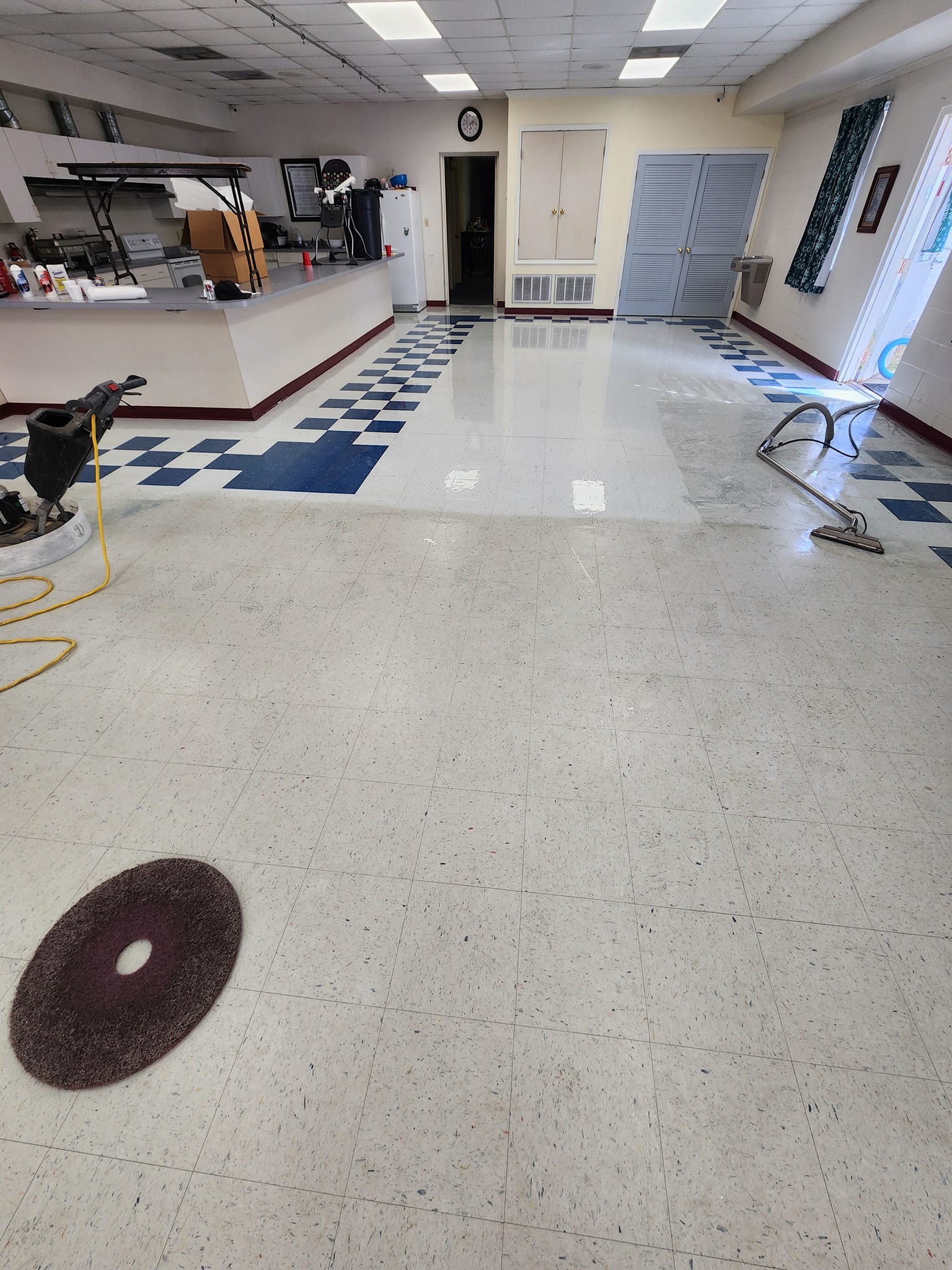
Your commercial floors are the first thing customers, patients, visitors and guests notice. Dirty, stained, or worn tile instantly creates a negative impression even if your staff, decor, and service are top-notch. Foot traffic, spills, grease, and dirt accumulate daily, and cleaning them the wrong way can do more harm than good.
At Knight’s Coastal Cleaning Solutions, we specialize in professional commercial tile floor cleaning to keep your business safe, sanitary, and looking its best. This guide shows what works, what doesn’t, and why professional services are essential for lasting results.
Know Your Tile Type Before You Clean
Choosing the right products and methods starts with knowing your tile type. Using the wrong cleaner or equipment can permanently damage your floors and grout.
| Tile Type | Recommended Cleaner | What to Avoid |
|---|---|---|
| Ceramic | pH-neutral commercial cleaner | Acidic cleaners, steel wool |
| Porcelain | pH-neutral or mild alkaline cleaner | Excess water, acids |
| Vinyl / VCT | Neutral floor cleaner | Ammonia, abrasive pads |
| Natural Stone (Marble, Granite, Travertine) | Stone-specific pH-neutral cleaner | Vinegar, bleach, acids |
| Unglazed / Quarry | Alkaline degreaser | Harsh acids, household cleaners |
Tip: When unsure, always use a pH-neutral cleaner it’s safe for almost all commercial tiles.
Step-by-Step Process to Clean Commercial Tile Floors
Here’s the most effective step-by-step guide for commercial tile floor cleaning:
1. Prepare the Area
Remove furniture, mats, and obstacles.
Sweep or vacuum thoroughly to remove loose dirt and debris.
2. Apply the Cleaner
Choose a commercial tile floor cleaner suitable for your tile type.
Dilute according to manufacturer instructions for safety and effectiveness.
3. Scrub the Tiles
For small areas: use a mop or soft brush.
For large commercial spaces: use an auto scrubber or floor cleaning machine for efficiency.
4. Rinse and Dry
Rinse with clean water to remove residue.
Use a squeegee or dry mop to prevent streaks.
these steps handle everyday surface dirt. What they cannot handle is deep grout contamination, years of wax buildup, mineral deposits, tile restoration, or the sanitation standards required in restaurants and healthcare facilities. For those results, professional equipment is not optional it’s the only thing that works.
How to Clean Grout on Commercial Tile Floors
Grout absorbs spills, bacteria, and grime. For light surface maintenance, here’s what you can do:
Apply dedicated grout cleaner to grout lines.
Let sit 5–10 minutes, then scrub with a nylon brush.
Rinse thoroughly and seal grout afterward.
Professional-grade note: Years of embedded grime, mold, and bacteria cannot be fully removed by hand. Industrial hot-water extraction and enzymatic cleaners are needed for true deep cleaning. Professionally cleaned grout stays clean longer and reduces your maintenance workload.
CLEANING SCHEDULE THAT ACTUALLY WORKS
Consistency beats intensity. Here’s a professional-recommended framework:
Daily
Sweep or vacuum all areas
Spot-clean spills immediately
Damp mop high-traffic zones
Weekly
Full mop with proper cleaner
Rinse with clean water
Inspect grout for stains
Monthly
Deep scrub the floor
Brush grout with dedicated cleaner
Inspect sealant
Every 3–6 Months (Professional Service)
Auto-scrubber deep clean
Hot-water extraction for grout
Grout sealing and floor finish restoration
Professional service every few months ensures your daily and weekly cleaning routines actually maintain pristine floors.
Industry-Specific Tips
Different commercial environments require slightly different approaches:
Restaurants: Clean spills immediately; sanitize high-touch areas; consider frequent deep cleaning.
Hospitals: Use disinfectants safe for tiles; maintain strict hygiene standards.
Offices: Sweep daily and schedule weekly deep cleans for common areas.
Hotels & Lobbies: Focus on aesthetics; use auto scrubbers to save time on large areas.
Schools: Prioritize safety with non-slip cleaners; clean during off-hours to minimize disruption.
DIY vs. Professional Tile Floor Cleaning
| Task | DIY | Professional |
|---|---|---|
| Daily sweeping & spot cleaning | ✅ | — |
| Weekly mopping | ✅ | — |
| Monthly scrubbing | ⚠️ | ✅ |
| Deep grout cleaning | ❌ | ✅ |
| Grout sealing | ⚠️ | ✅ |
| VCT strip & refinish | ❌ | ✅ |
| Tile restoration & shine recovery | ❌ | ✅ |
| Healthcare / Food-service sanitation | ❌ | ✅ |
| Post-construction cleaning | ❌ | ✅ |
Smart Strategy: Combine daily/weekly maintenance with professional service every 3–6 months. You save time, protect your investment, and ensure truly clean, safe floors.
How often should commercial tile floors be professionally cleaned?
Every 3 to 6 months for most businesses. Restaurants and healthcare facilities benefit from quarterly service. Offices and retail can often go 6 months between professional cleans if their daily and weekly in-house routine is consistent. The more foot traffic and contamination, the more frequent the professional service should be.
Why do my floors still look dirty right after mopping?
Almost always one of three causes. First, detergent residue wasn’t rinsed off it attracts new dirt within hours and causes that flat, dull look. Second, grout is contaminated you can mop the tile perfectly, but dirty grout makes the whole floor look grimy. Third, wax or floor finish has built up over time and turned yellow. All three require professional intervention to fully resolve.
How do professionals clean commercial tile differently?
Professional services use commercial auto-scrubbers that combine agitation, chemical injection, and vacuum extraction in a single pass removing deep-seated dirt that mopping simply leaves behind. Hot-water extraction machines reach into grout pores at temperatures and pressures no manual tool can replicate. They also apply professional-grade sealers and floor finishes not available to consumers. The result is a genuinely clean floor, not just a surface-clean one.
How do you remove stains from commercial tile?
Use a targeted stain remover or a scrub brush with a mild, pH-neutral solution. For tough stains, a grout-safe bleaching solution may help.
Maintenance Tips for Long-Lasting Floors
Sweep or vacuum daily to remove debris.
Address spills immediately to prevent stains.
Schedule weekly or monthly deep cleaning depending on traffic.
Use mats at entrances to reduce dirt accumulation.
Consider professional commercial tile cleaning services for periodic maintenance.
Why hire professional commercial tile cleaners?
- Save Time: Fast, efficient cleaning for large or high-traffic areas
- Protect Your Floors: Proper cleaners and tools extend tile life
- Ensure Safety & Hygiene: Eliminate hidden bacteria and slip hazards
- Professional Finish: Polished floors leave a lasting impression on clients
At Knight’s Coastal Cleaning Solutions, we offer professional commercial tile cleaning for restaurants, offices, healthcare facilities, retail stores, hotels, and schools.