

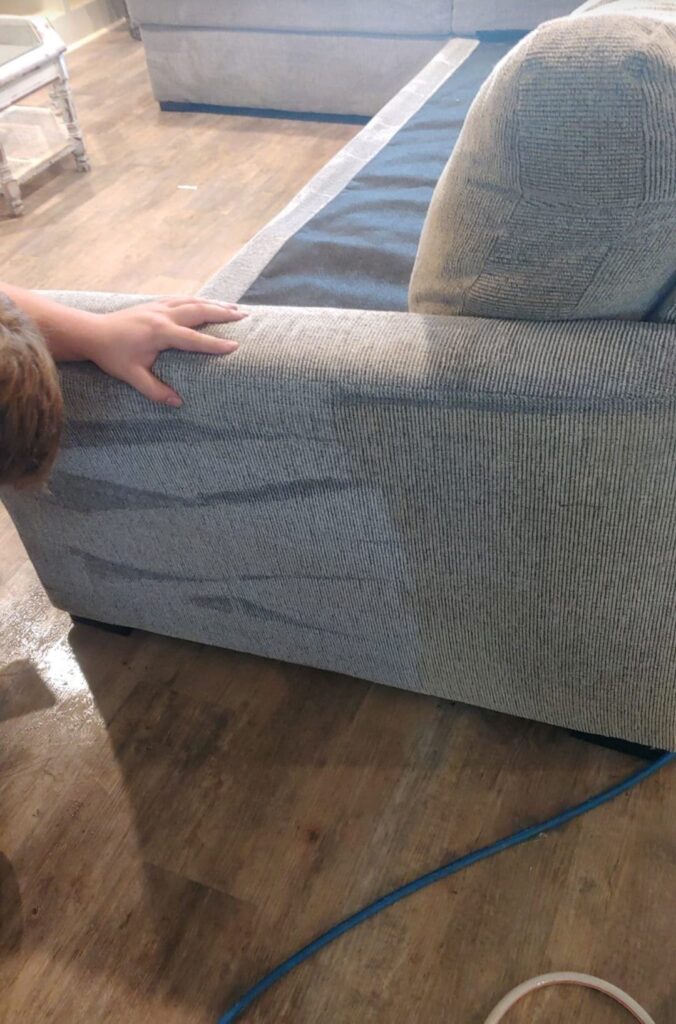
Water stains on a sofa or water stains on a fabric couch can be frustrating especially since water is supposed to be the safe thing to spill. You wipe, you blot… and later you notice a water stain on the couch, a ring, or cloudy patch on the upholstery.
The truth is:
Water can stain upholstery just as easily as other liquids when it dries the wrong way or interacts with dirt, oils, or minerals trapped in the fabric.
The good news? most water stains on upholstery can be removed. This guide will show you exactly how to do it safely and effectively. Below, you’ll learn why water stains upholstery, how to remove water stains from a fabric sofa, what to avoid, and when to call professionals like Knight’s Coastal Cleaning Solutions for expert upholstery cleaning service.
Why Does Water Stain a Sofa?
Many people assume water can’t stain fabric but water often contains minerals, impurities, and sediment that leave behind a mark as it dries.
When you see water stains on upholstery, it’s usually caused by:
1. Mineral Deposits in Water
Tap water contains minerals like magnesium and calcium. When the water dries, the minerals stay behind, leaving a water mark on the upholstery that looks like a ring or cloudy spot.
This is why water stains on a fabric sofa often look white or faded.
2. Water Redistributes Dirt and Oils Inside the Fabric
Upholstery fibers contain:
Body oils
Dust
Pet dander
Old cleaning residue
Skin cells
Airborne grease (especially near kitchens)
When water touches these contaminants, it lifts them, moves them outward, and deposits them at the edges of the wet area.
This creates a visible water ring on a couch, even if the original spill was clean.
This is why people often get water stains on a couch after cleaning especially when they over-wet the upholstery.
3. Fiber Type Determines How Bad the Stain Will Be
Different fabrics react differently:
Natural fibers (cotton, linen): absorb water deeply and show stains easily
Synthetic fibers (polyester, microfiber): resist water better, but still show marks if over-wet
Blended fabrics: may develop uneven drying spots
This is why how to remove water stains from a sofa fabric depends on the material and why understanding upholstery codes is essential.
How to Remove Water Stains From a Sofa
These DIY methods can help you get water stains out of upholstery.
Step 1: Blot the Area Immediately
If the stain is fresh:
Use a clean, dry microfiber towel
Blot gently
Do not rub – rubbing spreads the minerals and deepens the stain
Gently press and lift to remove excess moisture.
Step 2: Mix a Mild Cleaning Solution
Use:
Warm water
1–2 drops of gentle dish soap (Dawn works well)
Stir until slightly sudsy.
This breaks down oils and prevents the ring that causes water stains on a couch.
Step 3: Test Before Applying
Always test your mixture on an inconspicuous spot.
Many fabrics react differently, especially natural fibers.
This prevents:
Color fading
Water rings becoming worse
Texture damage
Step 4: Lightly Clean the Stain
This step is crucial to removing water stains on sofa fabric safely.
Dampen (not soak!) a clean microfiber towel in the soapy water
Wring out thoroughly until only slightly moist
Dab the outer edges first
Work inward
Keep the water amount minimal
Never scrub in circular motions
This is the part most homeowners get wrong, which leads to water stains on upholstery even after cleaning.
Step 5: Rinse and Neutralize
Use a second cloth dampened with distilled water, not tap water to remove soap residue.
Why distilled water?
No minerals
No chlorine
No additives
No chance of creating new stains
Leaving soap behind can create new streaks or dull patches.
Step 6: Dry the Area Properly
Let the sofa dry fully:
Use a fan
Open windows
Allow airflow
Do not use heat tools (hairdryers, heat guns). Heat can set stains permanently and warp certain fabrics.
Advanced Methods for Removing Water Stains on Upholstery
1. Baking Soda Method (For Light Stains Only)
Baking soda absorbs odors and light moisture.
Use this for very minor water stains on a fabric couch:
Sprinkle generously
Let sit 15–30 minutes
Vacuum with upholstery attachment
This does not remove deep water marks but helps reduce surface discoloration.
2. Spot Cleaners (Use With Care)
Spot cleaners can be effective if used correctly and only on fabrics approved for them.
Upholstery Care Codes to Know
W – Water-based cleaners are safe
S – Solvent-based cleaners only
WS – Both water-based and solvent-based allowed
X – Vacuum only — professional cleaning required
If your sofa is coded X, DIY attempts can permanently damage the fabric.
For these fabrics, professional cleaning service is recommended immediately.
Preventing Water Stains in the Future
Water stains often come back because the underlying problem isn’t addressed.
Follow these steps to prevent future water stains on upholstery:
1. Use a Fabric Protector
A professional-grade protector helps repel:
Liquids
Water spots
Dirt
Oils
This greatly reduces risks of future water stains.
2. Clean Spills Immediately
Fast action prevents water from interacting with oils or dirt already in the fibers.
3. Regular Maintenance
Vacuuming removes:
Dust
Skin particles
Soils
Pet hair
…all of which contribute to visible water rings.
What Stains Cannot Be Removed?
Even though most stains can be treated, some stains are difficult to remove:
1. Chemical Damage
Bleach, strong cleaners, or incorrect DIY solutions can burn fibers.
2. Deep Set-In Stains
Stains left untreated for months may bond with fibers.
3. Dye Transfer
Dark jeans, pillows, or blankets can bleed into upholstery. These require professional solvents and sometimes re-dyeing.
When to Call a Professional Upholstery Cleaner
DIY methods are effective for light stains, but professional upholstery cleaning service is the safer choice when:
The water stain keeps returning
The fabric is delicate
The stain is old or large
You see multiple water rings
The fabric code is X
The couch has pet urine, odors, or deep soil
At Knight’s Coastal Cleaning Solutions, we use:
Industry-grade upholstery extraction
Fabric-safe stain treatments
Low-moisture technology (prevents new water spots)
Specialized products for cotton, microfiber, linen & blends
Professional fabric protectors
This ensures your sofa is cleaner, healthier, and stays stain-free longer – without the risk of DIY damage.
If you want your couch looking brand new again, this is the fastest and safest option.
Conclusion
Water stains on upholstery may look intimidating, but they’re usually very treatable with the right method. By understanding why they happen and following proven cleaning steps, you can eliminate rings, marks, and dull patches from almost any sofa fabric.
But if the stain won’t budge, keeps reappearing, or you want a deeper clean than DIY allows, Knight’s Coastal Cleaning Solutions is here to help.
We restore fabric sofas, remove stubborn water stains, eliminate odors, and protect your furniture so it stays cleaner longer.
Want Your Sofa to Look New Again?
Schedule a professional upholstery cleaning with KCCS – fast, safe, and guaranteed to leave your couch spotless.