

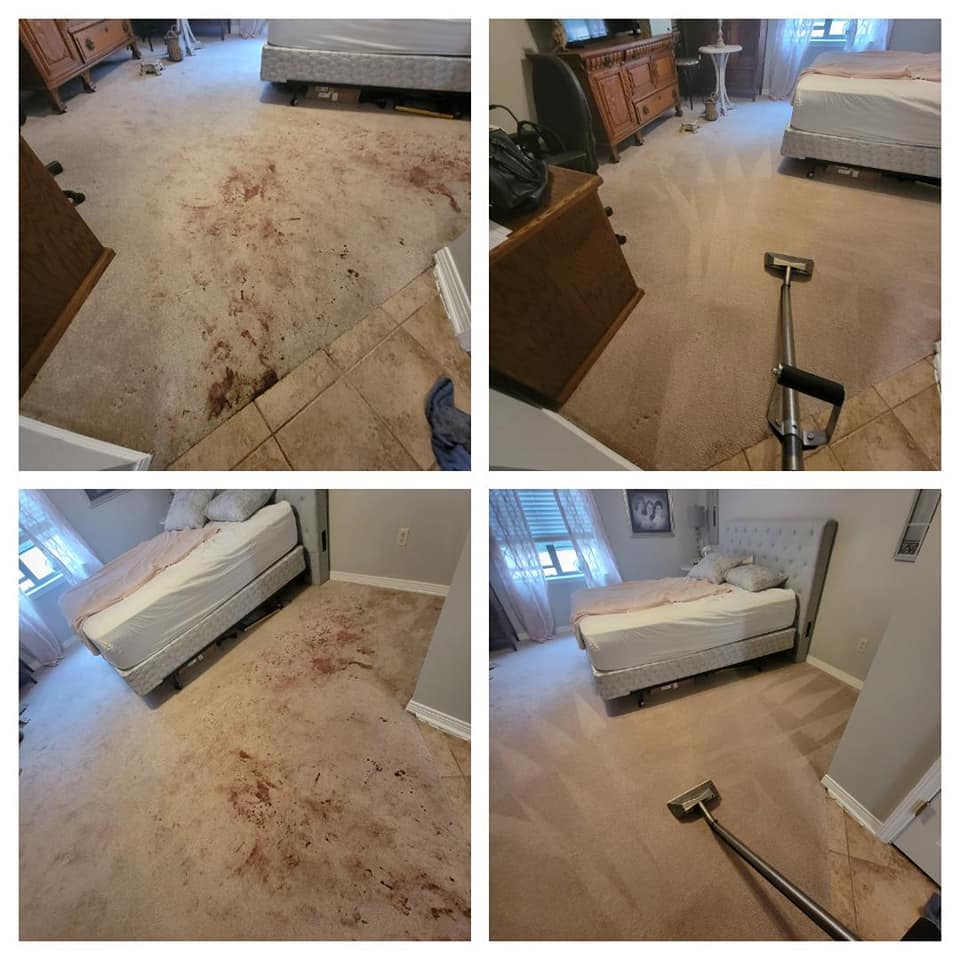
To remove a fresh pet stain from carpet, blot up as much liquid as possible with dry white towels, saturate the spot with a bio-enzymatic cleaner, let it sit for 10 to 15 minutes, and blot dry with cool water. Never scrub the fibers or use hot water, as heat permanently sets protein stains.
When an accident happens on carpet, the clock starts ticking immediately. Liquid urine moves quickly past the surface pile, through the primary carpet backing, and straight into the foam padding underneath. Treating the spot correctly in the first few minutes prevents permanent discoloration and keeps odors from settling into your subfloor.
What You Need Before You Start
Gather your supplies before you start blotting so the stain does not have extra time to soak downward.
• Plain white paper towels or white microfiber cloths: Colored rags can bleed dye onto damp carpet fibers.
• A bio-enzymatic pet cleaner: Look for a formula specifically labeled as enzymatic or bio-enzymatic rather than a standard oxygen or detergent spray.
• Cool or lukewarm tap water: Never use hot water on pet messes.
• A standard vacuum cleaner: Used only after the carpet is completely dry.
How to Clean Fresh Pet Stains (4 Steps)
Step 1. Blot Up Excess Liquid Immediately
Place a thick stack of dry white paper towels or a folded white towel directly over the wet spot. Press down firmly with your hands or stand on the towel to draw liquid upward out of the fibers. Replace wet towels with dry ones until no more moisture transfers to the cloth.
Never rub or scrub the stain. Scrubbing untwists and frays carpet yarns, creating a permanent fuzzy patch while pushing urine deeper into the carpet backing.
Step 2. Apply a Bio-Enzymatic Cleaner
Standard dish soaps and general carpet shampoos only wash away surface residue. Pet urine contains insoluble uric acid salt crystals that bind tightly to carpet fibers. Bio-enzymatic cleaners introduce beneficial bacteria that produce natural enzymes to digest those proteins and break down uric acid crystals into harmless carbon dioxide and water.
Before spraying the stain, test the cleaner on a hidden area inside a closet to confirm it does not affect your carpet’s dye. Once cleared, spray enough enzymatic solution to match the full spread of the urine underneath the surface remember that liquid spreads wider in the padding than it looks on top.
Step 3. Allow Full Dwell Time and Blot Dry
Enzymes need moisture and time to work. Check the bottle’s instructions and let the cleaner sit undisturbed for 10 to 15 minutes (or longer if recommended by the manufacturer). If the spot dries out too quickly, the enzymes go dormant and stop breaking down the waste.
Once the dwell time is up, lightly mist the area with cool water and blot again with a clean, dry white cloth to lift the remaining residue.
Step 4. Let the Carpet Air Dry and Vacuum
Keep pets and foot traffic off the damp spot until it dries completely. Place a standing fan nearby or open a window to speed up airflow. Once the fibers are 100% dry to the touch, run your vacuum over the area to lift the flattened carpet pile back to its normal texture.
How to Get Old Dog Urine and Set-In Stains Out of Carpet
Dried, crusty, or yellowed stains require a slower approach because the urine has already crystallized inside the fibers.
1. Loosen the dried residue: Lightly mist the spot with cool water to soften the hardened surface.
2. Saturate with enzymatic cleaner: Pour or spray enough enzymatic formula to penetrate the full depth of the stain.
3. Keep the spot moist: Lay a damp white towel over the treated area and cover it with a piece of plastic wrap. Leave it for 6 to 12 hours. Trapping the moisture prevents evaporation so the enzymes stay active long enough to break down older uric acid crystals.
4. Rinse and extract: Remove the towel, mist lightly with cool water, and blot firmly with dry towels until the area is nearly dry.
What Is "Wick-Back" and Why Do Old Stains Return?
If a stain disappears right after cleaning only to reappear 24 hours later, you are seeing wick-back. As the surface fibers dry, moisture trapped deep in the carpet backing or padding travels upward along the yarn, carrying dissolved urine residue back to the tips of the carpet. Weighing down a thick stack of dry towels over the spot for several hours while it dries helps pull that lingering moisture into the towels instead of the carpet tips.
Why Does My Carpet Still Smell Like Pee After Cleaning?
When pet urine dries, the water evaporates, leaving behind concentrated uric acid crystals. On a dry day, those crystals remain dormant and produce very little odor.
However, the moment moisture enters the air, those salt crystals reactivate and release ammonia gas. Along the Mississippi Gulf Coast, high year-round humidity and heavy afternoon rainstorms routinely trigger dormant urine trapped beneath the surface making an accident from six months ago suddenly smell brand new.
If you have already cleaned the surface and the odor keeps returning on humid days, the urine has penetrated past the primary backing and soaked into the carpet padding and subfloor. Topical sprays cannot reach through dense carpet backing, and household rental machines often make the problem worse. Rental units lack the vacuum lift needed to pull water out of foam padding, leaving the subfloor soaking wet and creating a breeding ground for odor and mildew.
4 Things You Should Never Use on Pet Stains
• Steam cleaners or hot water: Water hotter than 140°F denatures the proteins in urine, vomit, and blood, chemically bonding the stain to nylon and wool fibers permanently.
• Ammonia-based household cleaners: Ammonia shares a chemical profile with pet urine. Using it often confuses dogs and cats, encouraging them to mark the exact same spot again.
• Chlorine bleach or harsh oxygen bleaches: Bleach strips color from synthetic and natural carpets, leaving a permanent light spot that cannot be cleaned away.
• Vinegar and baking soda as a standalone fix: While white vinegar temporarily neutralizes fresh ammonia odor, acetic acid does not break down uric acid salt crystals. Once the vinegar smell fades, the pet odor returns.
When to Call a Professional Carpet Cleaner
DIY methods work well for small, fresh accidents caught on the surface. However, calling a trained technician saves you from permanent carpet damage and is far less expensive than replacing ruined flooring when you notice any of these signs:
• Persistent odor on humid days: The contamination has reached the carpet pad or wood/concrete subfloor.
• Repeated marking in one area: Your pet’s nose can still detect uric acid crystals trapped below the backing.
• Large or multiple accidents: Senior pets or newly adopted puppies often saturate areas too wide for spot-blotting.
• Delicate natural fibers: Wool, silk, or sisal rugs require specialized pH-balanced treatments to prevent permanent browning or shrinkage.
Professional technicians use commercial truck-mounted extraction and specialized sub-surface extraction tools that flush enzymatic solutions deep into the carpet padding and pull 95% of the moisture back out removing both the visible stain and the hidden odor source without soaking your subfloor.
Need Help Rescuing Your Carpets From Stubborn Pet Stains?
Don’t let deep urine contamination ruin your flooring or linger every time the humidity rises. Knight’s Coastal Cleaning Solutions uses pet-safe enzymatic treatments and deep sub-surface extraction to eliminate stains and odors at the source.
Explore our local carpet cleaning service, serving Biloxi, Gulfport, Ocean Springs, and Pascagoula. Call today at (228) 249-9334 to schedule an inspection.
How do I get dog poop or vomit stains out of carpet?
Never rub solid waste into the carpet. Use a dull butter knife, plastic scraper, or spoon to lift away as much solid material as possible, working from the outside edge toward the center so the spot does not spread. Once solids are removed, blot the area with a solution of cool water and two drops of clear, dye-free dish soap, rinse by blotting with plain cool water, and finish with an enzymatic cleaner to remove any remaining organic odor.
Are enzymatic cleaners safe to use around dogs and cats?
Yes, most reputable bio-enzymatic cleaners are non-toxic and safe for households with pets and children once the treated area has dried completely. Always keep pets off the damp carpet during the dwell and drying stages so they do not lick the wet solution or track moisture onto hard floors.
Can professional carpet cleaning remove old, set-in pet stains?
In most cases, yes. Even if a stain has been there for months, professional-grade oxidizing agents and sub-surface enzymatic flushes can break down old urine pigments and extract trapped crystals from the padding. Only severe cases where urine has permanently bleached the carpet dye or rotted the subfloor require pad replacement or carpet patching.