
Roof Cleaning
Safe & soft wash roof cleaning services that removes black streaks, algae, and organic growth without damaging your shingles or voiding your warranty.
Professional Roof Cleaning for Shingle & Metal Roofs
Those dark streaks running down your shingles aren’t dirt, soot, or ordinary surface staining they’re a living organism called Gloeocapsa magma, a bacteria that feeds on the limestone filler in asphalt shingles. It thrives in warm, humid climates, spreads with rain and wind, and gradually turns a light-colored roof dark and blotchy. Left untreated, it holds moisture against the shingle surface and can shorten the roof’s usable life. Professional roof cleaning removes it at the root not just off the surface using the best soft wash roof cleaning method available for both shingle roof cleaning and metal roof cleaning.
What’s included:
- Low-pressure “soft wash” method safe for shingle and metal roofing
- Roof algae removal, moss, lichen, and black streak treatment.
- Treatment to slow regrowth
- Gutter-safe runoff process
- Inspection for early signs of wear while we’re up there
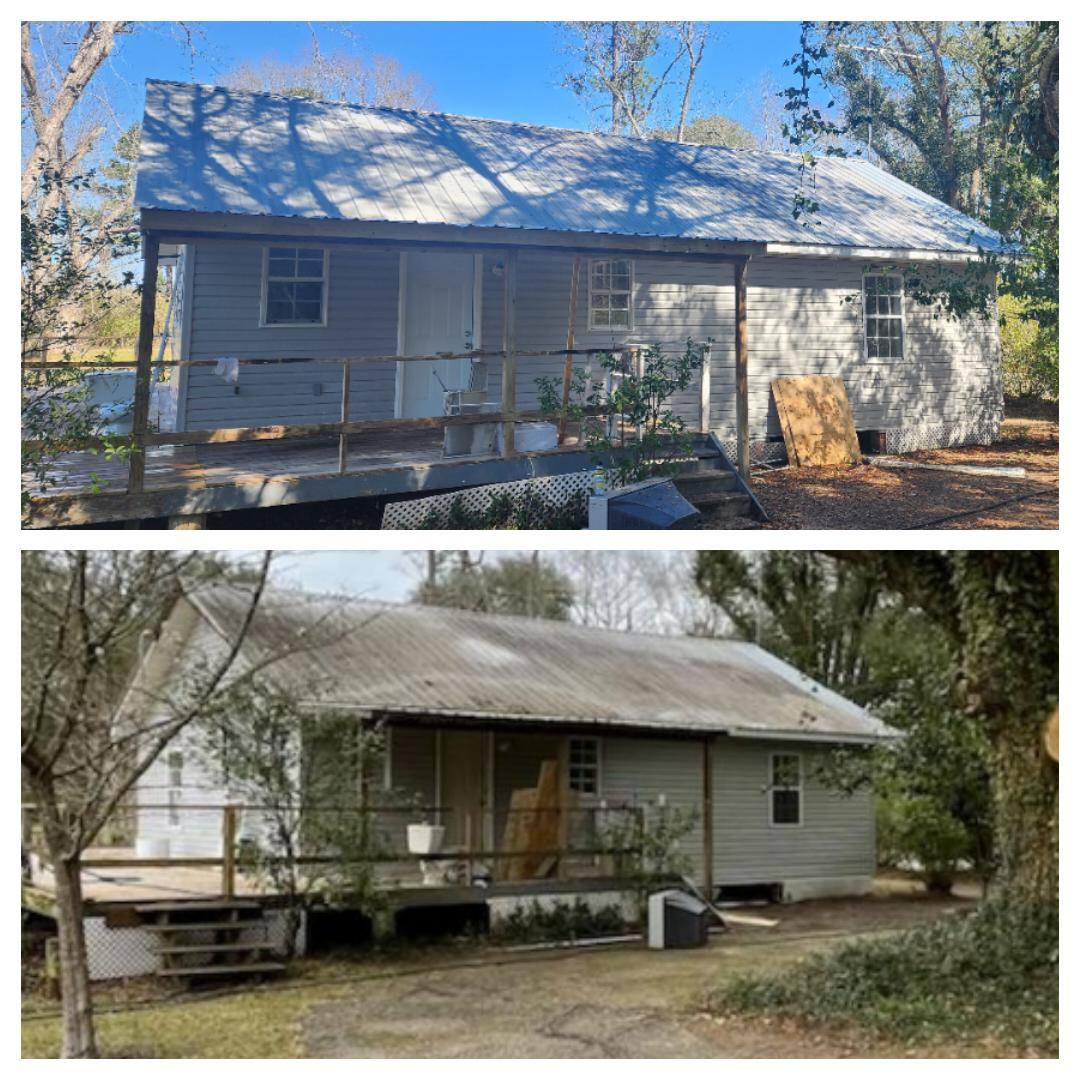
What's Actually Causing the Black Streaks
Gloeocapsa magma isn’t true algae it’s a cyanobacteria but it’s commonly called “roof algae” because of where and how it grows. It produces a dark, protective coating to shield itself from UV light, which is what shows up as the black streaking pattern running down a roof’s north- or shade-facing slopes. It spreads by spore, carried by wind and rain from roof to roof and house to house, which is why it’s common to see it appear on a home not long after a neighbor’s roof develops it.
Our Process
- Free inspection: we assess your roof’s material, pitch, and the extent of staining or growth before quoting.
- Property protection: surrounding areas protected before work begins.
- Soft wash application: a cleaning solution is applied at low pressure and given dwell time to penetrate and kill the algae at the root.
- Controlled rinse: a gentle, low-pressure rinse clears away the loosened residue without disturbing shingles or granules.
- Final walkthrough: we review the results with you before we leave.
Soft Wash Roof Cleaning vs. Pressure Washing
Roof pressure washing and true soft wash roof cleaning are not interchangeable, and using the wrong one can cost you more than the cleaning itself.
The Asphalt Roofing Manufacturers Association (ARMA) specifically recommends low-pressure, chemical-based cleaning for shingle roofs not high-pressure roof washing. Here’s why that matters:
- High pressure strips shingle granules. Those granules protect the shingle from UV damage. Once they’re gone, they don’t grow back, and the exposed asphalt underneath breaks down faster.
- It can void your roof’s warranty. Many shingle manufacturers include language that voids coverage if a roof has been pressure washed.
- It doesn’t kill the algae it just removes the surface stain. Since the organism isn’t fully eliminated at the root, streaking often returns faster after a pressure wash than after a proper soft wash.
- It can force water under the roofline. High-pressure spray angled upward under shingles or flashing can create leaks that weren’t there before.
Roof Cleaning vs. Roof Replacement
A full roof replacement can run well into five figures. Roof cleaning services are a small fraction of that cost, and for a roof that’s structurally sound and only cosmetically stained, cleaning is usually all it actually needs. It won’t fix failed underlayment or structural damage, but it’s worth strong consideration if you’re:
- Preparing your home for sale (a stained roof is one of the most common things that makes buyers and inspectors assume a roof needs replacing, even when it doesn’t)
- Trying to extend the life of a roof that’s 10–15 years old.
- Maintaining a newer roof to keep algae from ever gaining a foothold
- Responding to an insurance company that’s flagged roof condition at renewal
What Does Roof Cleaning Cost?
Roof cleaning cost typically starts at $399 for an average-sized home, (final pricing depends on roof condition, size, accessibility/height) and the extent of algae or moss growth – a small fraction of a full roof replacement, which can run into five figures. We provide a free and exact roof cleaning prices before any work begins.
What Our Roof Cleaning Removes
- Black streaks & algae (Gloeocapsa magma) – treated and killed at the root, not just rinsed off the surface
- Moss & lichen – broken down chemically rather than scraped, which avoids damaging the shingle underneath
- Organic growth & buildup – common on shaded, tree-covered sections of roof
- General dirt, pollen & grime – restores even color and curb appeal across the whole roof
Frequently Asked Questions
What causes the black streaks on my roof?
A bacteria called Gloeocapsa magma, which feeds on the limestone filler in asphalt shingles. It’s commonly mistaken for dirt, soot but it’s a living organism that spreads by spore and thrives in warm, humid conditions.
Is soft wash roof cleaning safe for my shingles?
Yes, it’s the method the Asphalt Roofing Manufacturers Association (ARMA) recommends specifically because it doesn’t strip granules or risk voiding your roof’s warranty the way high-pressure washing can.
Do you offer roof cleaning near me?
Yes – we provide roof cleaning services across the Mississippi Gulf Coast, , including Gulfport, Biloxi, Ocean Springs, Pascagoula,
Why shouldn't I just use a pressure washer?
High pressure can strip protective granules off asphalt shingles, force water under the roofline, and void your manufacturer’s warranty and it often doesn’t kill the algae at the root, so streaking can come back faster than it would after a proper soft wash.
Will roof cleaning damage my shingles?
No, when done correctly. Soft washing uses controlled low pressure and a cleaning solution designed for shingle roofs, so the surface, granules, and flashing stay fully intact.
How long will my roof stay clean afterward?
It depends on shade and tree cover, but soft-washed roofs commonly stay clean for several years before any touch-up is needed. Heavily shaded roofs tend to need it sooner than roofs with more direct sun exposure.
Do you clean metal roofs, or just shingle roofs?
We clean both asphalt shingle and metal roofs, adjusting our method to the material.
How much does roof cleaning cost compared to a new roof?
Roof cleaning is a small fraction of the cost of a full roof replacement. We’ll give you an exact number after a free inspection.
Don't Replace Your Roof, Just Clean It
Black streaks and algae only get worse the longer they sit. Get a free roof soft washing inspection today and find out if cleaning is all your roof really needs.